Coast Guard seeks commercial icebreakers for Northeast winter operations
The U.S. Coast Guard is seeking information from commercial operators of U.S.-flag icebreaking vessels to support winter navigation in Northeast ports and waterways, with a response deadline of November 13, 2026.
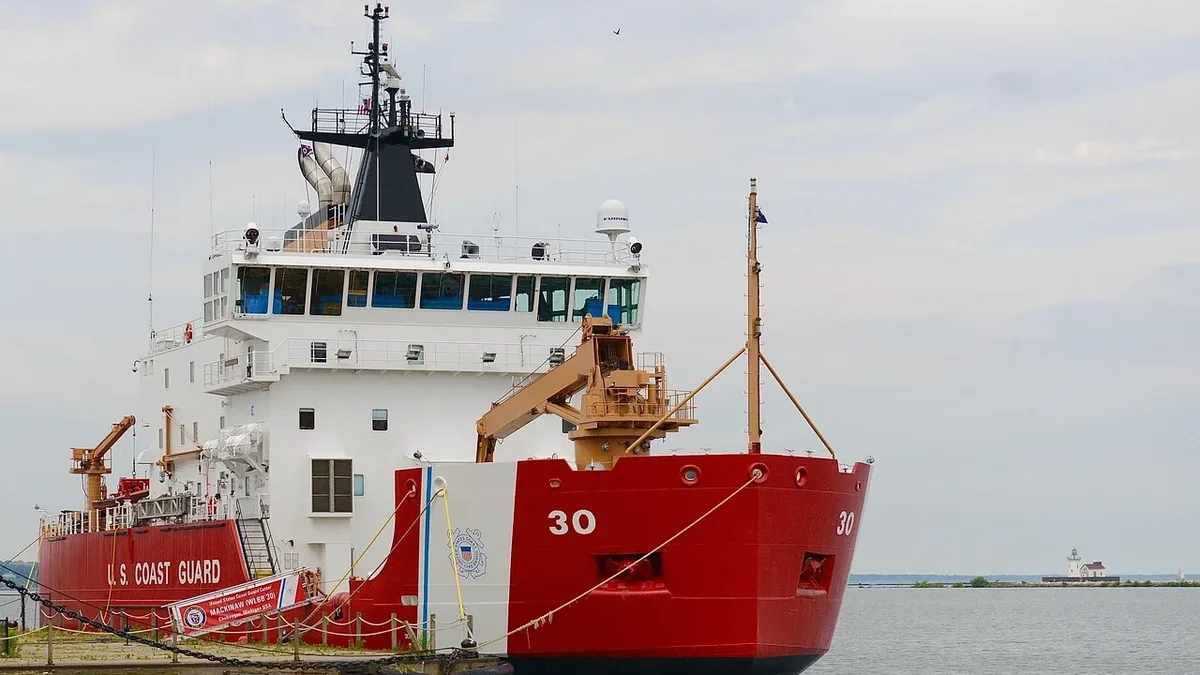
The U.S. Coast Guard has issued a request for information seeking U.S.-flag, Jones Act-qualified commercial vessels capable of icebreaking in Northeast waterways this winter. A Request for Information was posted on SAM.gov on October 21, with responses due by 5 p.m. Eastern time on November 13, 2026.
This initiative is market research for a possible future procurement and will not itself result in a contract award. The Coast Guard is exploring the use of commercial icebreaking vessels to help keep Northeast ports and waterways open this winter. The move follows the severe ice conditions of the 2025-2026 winter, which saw assets deployed for Operation Reliable Energy for Northeast Winters (RENEW) to maintain the flow of heating oil and essential supplies.
Vessel requirements and operational scope
Vessels must meet specific Coast Guard certification standards and support critical navigation tasks. Each vessel must hold a valid Coast Guard Certificate of Inspection covering the required routes and operating conditions.
Identified waterways include Boston Harbor and its tributaries, the Cape Cod Canal and Buzzards Bay, and waterways serving Hyannis, Nantucket, and Martha's Vineyard in Massachusetts. Also included are Narragansett Bay in Rhode Island, and waterways serving Bridgeport, Stamford, and New Haven in Connecticut.
Tasks include opening and maintaining ice tracks, escorting vessels with critical cargo, and clearing commercial channels. Emergency work could involve breaking ice jams to avert localized flooding and enabling supplies to reach isolated communities.
Operational parameters and timelines
Contractors would provide vessels, crews, equipment, and supervision, while the Coast Guard would direct operational priorities. Operators must mobilize in the Northeast by January 2, 2027.
| Parameter | Requirement |
|---|---|
| Ice Thickness Capability | 4 to 18 inches (10 to 46 cm) |
| Daily Operating Hours | Up to 12 hours during daylight |
| Minimum Support Window | 7 days continuous |
| Advance Notice for Tasking | 72 hours |
The Coast Guard anticipates providing 72 hours’ notice before services are needed. Work exceeding 12 hours per day requires prior approval from the contracting officer.
Market research for future procurement
This RFI is planning documentation that does not guarantee a contract award but could supplement the Coast Guard's acquisition of new icebreakers. The formal solicitation for new Homeland Security Cutter-Light Icebreakers was issued earlier this year.
The Coast Guard is requesting extensive vessel particulars and operator experience. Respondents are asked for details including ownership, build year, dimensions, draft, crew complement, and previous icebreaking experience. They may also submit non-binding daily rate ranges, mobilization costs, and recommendations on contract structures like standby or emergency services.
Commercially contracted tugs supplemented government icebreakers during the previous winter, including operations in New York Harbour and the Hudson River. The current request could provide another option for meeting near-term winter demands while the fleet modernization effort moves forward. Contract award decisions will follow the November 13 response deadline.