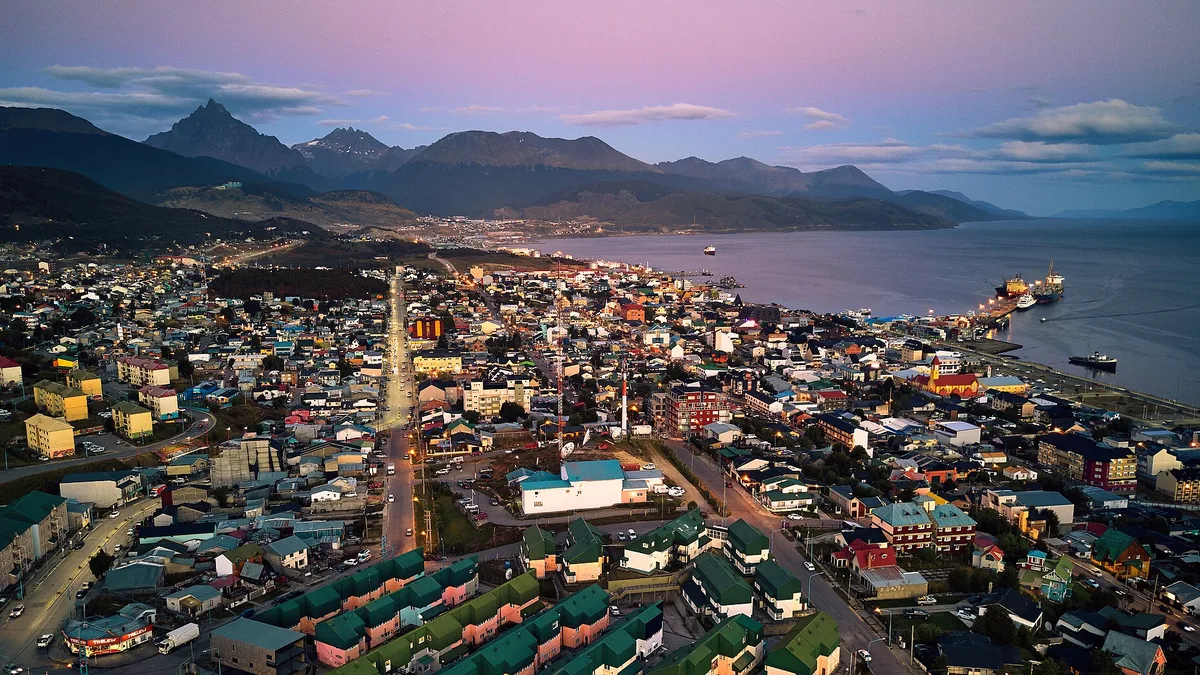
Ushuaia
| Country of origin | Argentina |
|---|---|
| First created | Late 19th century |
| Original use | Naval and commercial shipping |
| Location | Tierra del Fuego archipelago |
| Water body | Beagle Channel |
| Port type | Deep-water, ice-free |
| Cruise season | October to April |
| Notable feature | Southernmost city in the world |
Origin and history
Ushuaia is a port city located in Argentina, specifically within the Tierra del Fuego province at the southern tip of South America. Its origins trace back to the late 19th century, with its formal founding occurring in the 1880s as a missionary settlement and later a penal colony. The site was historically inhabited by the Yámana (Yaghan) people for thousands of years prior to European contact. The city's development was heavily influenced by its strategic position on the Beagle Channel and its role as a remote outpost for the Argentine government. Growth remained slow for decades, with the penal colony operating as a primary economic driver until the mid-20th century. The modern port infrastructure essential for tourism and supply began significant development in the latter half of the 20th century, coinciding with increased regional exploration.
What it is for
Ushuaia functions as the primary maritime gateway for expeditions to Antarctica and the Southern Ocean. The port serves as a critical logistical hub for scientific research vessels, providing fuel, supplies, and crew changes for missions heading south. It is the main embarkation and disembarkation point for commercial cruise ships operating Antarctic itineraries, handling passenger transfers and customs procedures. The port facilities also support the local fishing industry and regional cargo transport to the Falkland Islands and other remote parts of Tierra del Fuego. Its deep-water port and sheltered location in the Beagle Channel make it a vital safe harbor for ships navigating the treacherous Drake Passage. Additionally, it acts as a home port for several expedition cruise companies, which base their ships there for the Antarctic season.
Pros and cons
A primary advantage of embarking from Ushuaia is its proximity to Antarctica, which reduces the number of sea days required to cross the Drake Passage compared to departures from other continents. The city itself offers travelers convenient pre- and post-cruise amenities, including hotels, restaurants, and airports with connections to Buenos Aires. The dramatic mountainous backdrop of the port provides a spectacular setting for the start of a voyage. A significant drawback is the highly unpredictable and often severe weather in the region, which can lead to last-minute itinerary changes, delayed port calls, or exceptionally rough seas during the crossing. The port's remote location means that flight cancellations or delays into Ushuaia are not uncommon, posing a genuine risk of missing a ship's departure. Furthermore, the concentration of cruise traffic during the short Antarctic summer season can lead to crowded port facilities and a lack of last-minute availability for tours or services.
Who it suits
This port suits physically resilient travelers who are comfortable with potential itinerary fluidity and the possibility of encountering rough seas during the transit. It is ideal for passengers specifically seeking an Antarctic expedition, as Ushuaia is the most efficient point of departure for this goal. The port appeals to those who appreciate stark, dramatic landscapes and are interested in the historical context of a remote frontier city. It is less suitable for travelers who require guaranteed schedules, calm seas, or extensive luxury shopping at the port of embarkation. First-time cruise passengers who are anxious about motion sickness or last-minute travel disruptions may find the logistical challenges stressful. It best serves adventure-focused individuals and polar enthusiasts for whom the destination itself is the priority, outweighing the potential inconveniences of traveling to the world's southernmost city.