Panama Canal restrictions tighten capacity
New draft and transit limits at the Panama Canal are forcing container lines to carry less cargo per ship, with a record $5.3 million auction bid
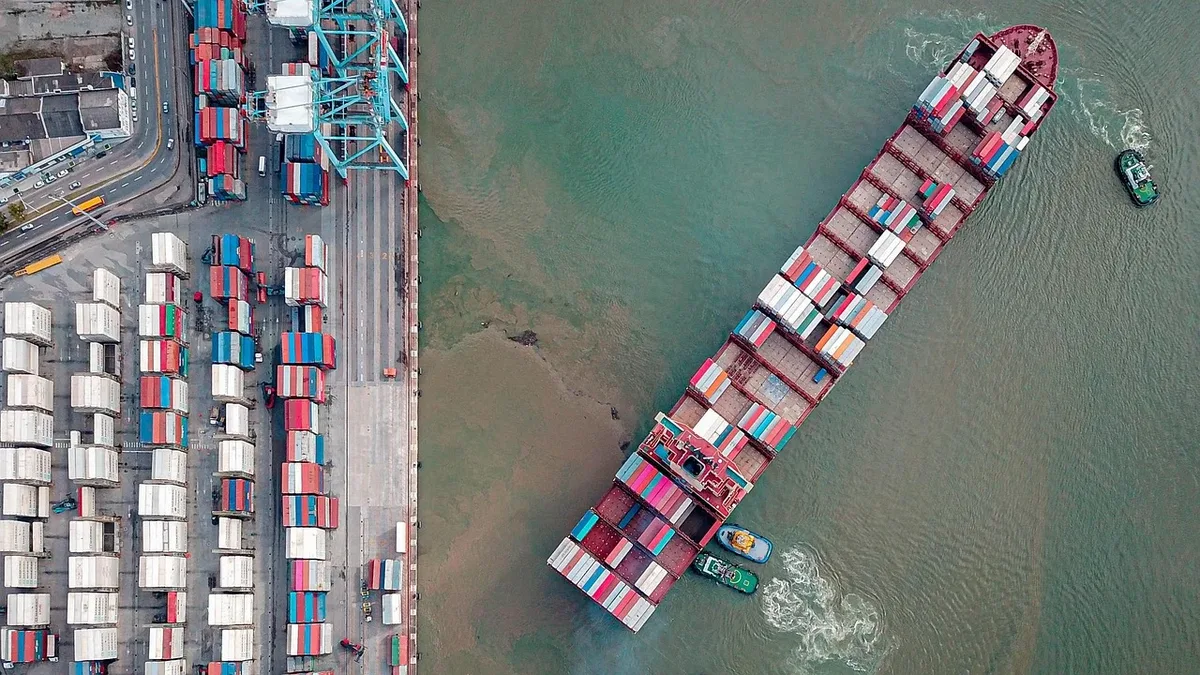
A shipper has paid a record $5.3 million to secure a transit slot through the Panama Canal. The French container line CMA CGM has postponed a $150 per TEU Low Water Surcharge on cargo from South America's west coast, moving its start date from September 1 to October 1.
These developments come as new restrictions on vessel draft and daily transits are set to tighten at the canal. Industry analysts warn the measures will squeeze container shipping capacity, not just by reducing the number of ship slots but by limiting how much cargo each vessel can carry.
New Draft and Transit Limits
From September 2, the maximum permitted draft for Neopanamax vessels will be 14.63 meters. This will drop further to 14.48 meters from October 1. The number of daily transits is also scheduled to fall.
| Date | Daily Transits |
|---|---|
| From September 3 | 34 |
| From September 15 | 32 |
Analyst Jonathan Roach of Braemar noted the core issue. "This time the issue is not simply fewer transit slots. It is fewer slots and less cargo per ship." Data from Braemar indicates the scale of the impact. Their July figures recorded 189 Neopanamax transits, with 85 of those performed by ships drawing 15 meters or more. This means about 45% of Neopanamax transits could be affected by the new draft rules, representing roughly 55% of the nominal container capacity moving through the Neopanamax locks.
Impact on Carriers and Cargo
The immediate response from shipping lines will likely be to load less cargo onto each vessel, according to Roach. "Vessels can remain on their existing services, but may have to sail below their normal intake to meet the draft restriction." A further reduction in daily transits could eventually block some ships from the canal entirely, while waiting times and delays would compound the effective loss of capacity.
The capacity squeeze may extend beyond the canal itself. Roach pointed out that cargo displaced from Panama routes would need to be absorbed elsewhere in the global shipping fleet, potentially affecting broader network stability. In a worst-case scenario, if conditions worsen, carriers could consider diverting Asia-to-US East Coast services around Africa's Cape of Good Hope. Such a rerouting would add approximately 30% to transit times and tie up vessels for longer periods.
"The Panama Canal does not need to close to disrupt container shipping; it only needs to become a little less deep and a little less available," Roach warned. The postponed surcharge from CMA CGM will apply to a wide range of destinations from South America's west coast, including North Europe, the Mediterranean, the US East and Gulf coasts, and the Middle East. Industry consultant Lars Jensen, cited by The Loadstar, suggested the surcharge date change seemed more like an initial miscommunication, as the September 1 date had been announced just three days prior to the delay.