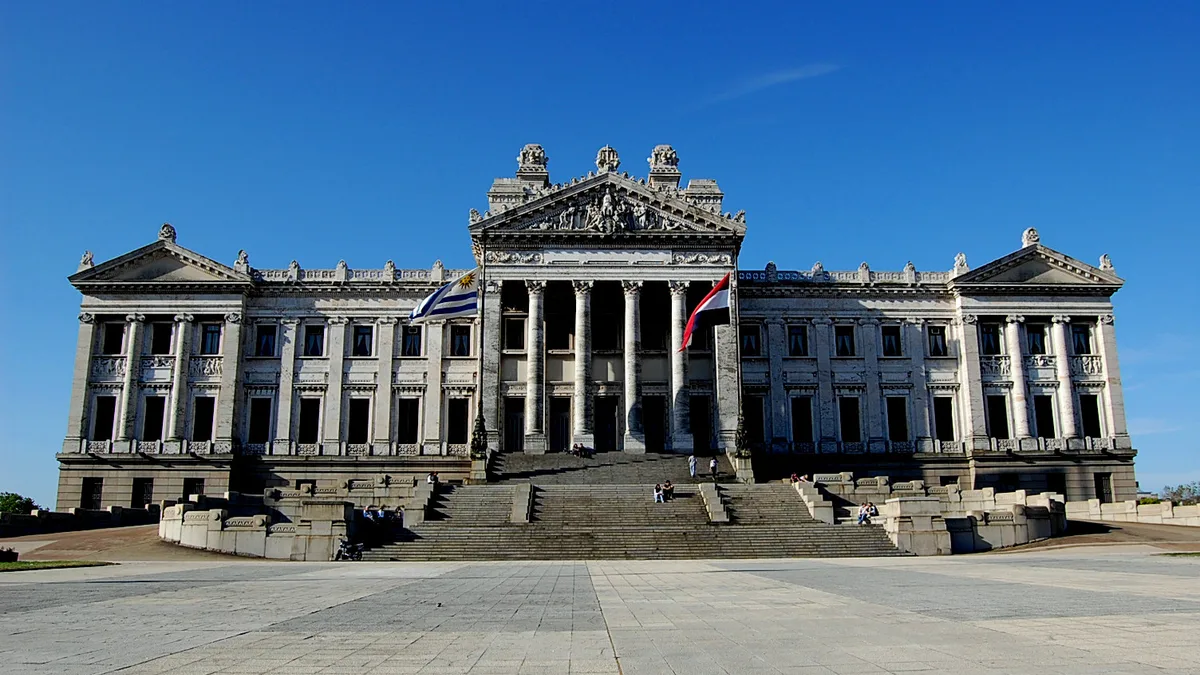
Montevideo
| Country of origin | Uruguay |
|---|---|
| First created | 18th century |
| Original use | Commercial and naval port |
| Location | Montevideo Bay, Río de la Plata |
| Operated by | National Ports Administration (ANP) |
| Primary cargo types | Containers, grain, vehicles, bulk liquids |
| Cruise season | October to April |
| Terminals | Multiple specialized terminals (container, grain, liquid bulk, cruise) |
Origin and history
Montevideo is the capital and primary port of Uruguay, a country in South America. The city's port facilities developed naturally around its deep, sheltered harbor on the Río de la Plata estuary. Its founding as a fortified settlement by Spanish colonial forces occurred in the early 18th century, specifically in the 1720s, to counter Portuguese expansion in the region. The port's strategic and commercial importance grew steadily throughout the colonial period as a hub for regional trade. Following Uruguay's independence in the 1820s, the port became central to the nation's economy, exporting agricultural products like wool, hides, and later meat. Major modernizations and expansions of the port infrastructure took place throughout the late 19th and 20th centuries to accommodate larger vessels and containerized cargo.
What it is for
The Port of Montevideo serves as Uruguay's principal maritime gateway for international trade and commerce. It functions as a major container transshipment hub for the South Atlantic, handling cargo destined for other regional ports in Argentina, Brazil, and Paraguay. The port facilities accommodate a wide range of vessels, including container ships, bulk carriers, roll-on/roll-off (Ro-Ro) ships, and cruise liners. It provides essential services such as cargo loading and unloading, customs clearance, warehousing, and logistical support for land transportation. For cruise itineraries, it is a key port of call, offering passengers access to the historic neighborhoods and cultural attractions of Montevideo. The port also supports the local fishing industry and functions as a base for the Uruguayan Navy and maritime authorities.
Pros and cons
A significant pro of Montevideo as a cruise port is its convenient location, allowing ships to dock directly at the city center within easy walking distance of the historic Old City. The port offers a generally secure and organized environment for disembarkation, with clear signage and available tourist information. A notable con is that the immediate port area is primarily industrial, so the most appealing parts of the city require a short walk, taxi, or organized tour to reach. Some passengers regret choosing independent exploration without prior planning, as key attractions like the Mercado del Puerto or the Rambla waterfront are spread out. The common mistake is underestimating the scale of the city and spending too much time in the immediate port warehouses, missing the distinct architectural and cultural character of nearby neighborhoods. Weather can also be a drawback, as the Río de la Plata estuary is known for sudden, strong winds and rain that can disrupt planned shore excursions.
Who it suits
This port suits cruise passengers with an interest in colonial history, architecture, and urban culture, as Montevideo offers a more subdued and authentic South American capital experience compared to larger, busier cities. It is well-suited to independent travelers who are comfortable walking or using local taxis to explore compact, grid-patterned neighborhoods like Ciudad Vieja and Centro. The port appeals to those seeking a relaxed day ashore, perhaps enjoying a lengthy lunch of Uruguayan barbecue at the Mercado del Puerto or a stroll along the extensive Rambla waterfront promenade. It is less suited for passengers seeking dramatic natural landscapes, extensive sandy beaches, or high-adventure excursions directly from the port. First-time visitors to South America often find it a manageable and welcoming introduction to the continent, while seasoned travelers appreciate its distinct local character and lack of overwhelming crowds.