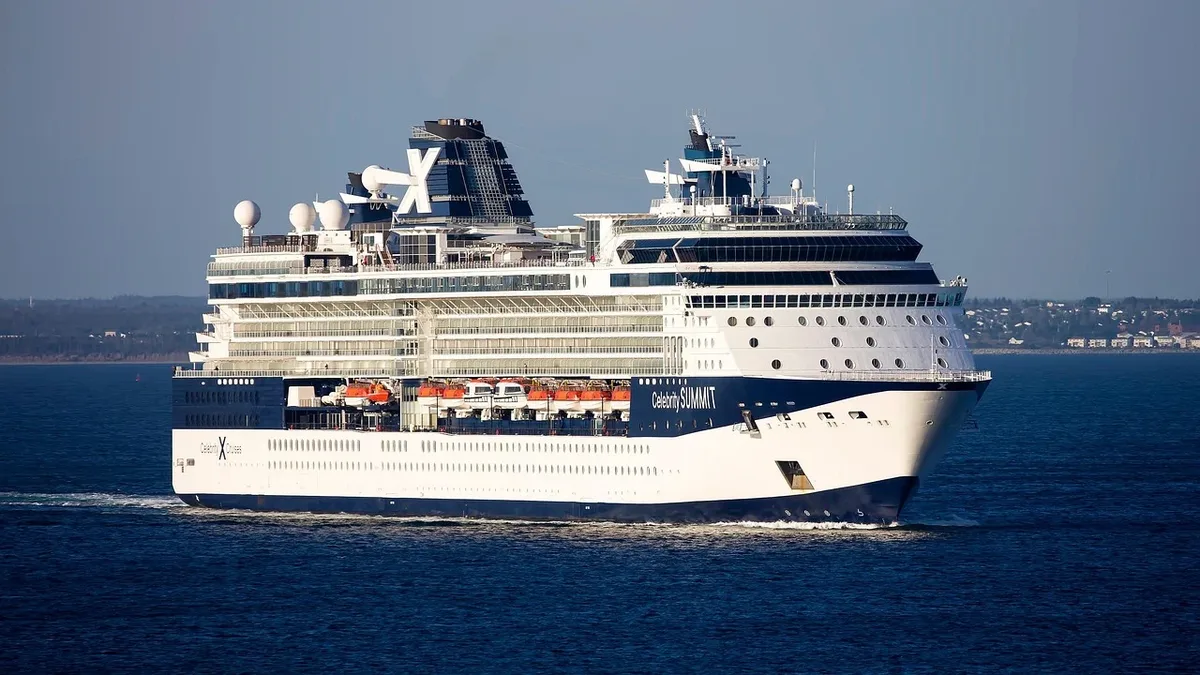
Mediterranean Cruise Leaders Debate Growth
At Seatrade Cruise Med 2026, industry executives discussed balancing record passenger numbers with demands for sustainable practices and authentic
The Mediterranean cruise industry is handling record growth alongside rising demands for sustainability and authentic travel experiences. Industry leaders debated this balance at the Seatrade Cruise Med 2026 conference in Las Palmas.
Bud Darr, CEO of the Cruise Lines International Association (CLIA), declared the sector's health "excellent" in a keynote address. He pointed to a global orderbook representing about $96 billion in new ship commitments extending beyond 2036, with more than 80 vessels on order. Darr challenged the notion that ships are uniformly getting larger, stating this idea is "just not true," with growth occurring across all segments of the industry.
Industry Metrics Need Overhaul
MedCruise president Theodora Riga argued that traditional growth metrics are no longer sufficient. With annual global passenger movements now at 39.75 million, she said the industry's old question of "how much can we grow?" has run its course. Riga framed rising expectations from guests, governments, and local communities as an opportunity. "Success is creating something else: expectation," she told delegates.
She emphasised that the critical measure is "not how many passengers arrived, it's how far the value travelled," extending benefits to local businesses like taxi drivers and restaurants. Riga also challenged seasonal assumptions about Mediterranean cruising, noting that the region's culture, gastronomy, and great cities operate year-round.
Decarbonisation Hinges on Fuel Supply
On environmental goals, Darr focused on practical challenges. "Without the molecules it doesn't happen, it's just a bunch of smoke and mirrors," he said, arguing that fuel availability is critical for meeting decarbonisation targets. He outlined various alternative fuel pathways and their trade-offs.
Darr noted progress, including that non-heavy fuel oil usage climbed from 26% in 2019 to 40% in 2025. The number of ships able to connect to shore power has tripled since 2018, and most vessels, representing 84% of industry capacity, can now produce 100% of their freshwater onboard.
Fleet Diversity and Deployment Agility
Panelists stressed that the cruise fleet is not a uniform proposition. Samantha Stimpson, CEO of Fred. Olsen Cruise Lines, cautioned against a one-size-fits-all approach. "There's different sized vessels, different ages of vessels, different levels of investment in those vessels," she said. She argued smaller ships offer more flexibility in smaller destinations and ports.
Deployment strategies are becoming more agile, driven by logistics and commercial factors. Chris Theophilides, CEO of Celestyal Cruises, identified geopolitical risk management as a key new factor. "The need to be geopolitically agile. We find the deployment reviews being more common and more frequent," he explained. Cruise lines like Celestyal now offer a wide range of voyage durations, from 3 to 22 days, to meet different guest expectations.
Port schedules are also adapting to prioritise authentic experiences over operational convenience. "Where it makes sense we overnight, where it makes sense we have late stays. It's not that 9am to 5pm fixed formula anymore," Theophilides noted. He pointed out that not all genuine experiences happen within traditional port hours, an approach more easily implemented with mid-size and smaller vessels. For many lines, including Fred. Olsen, the Mediterranean remains a core and year-round destination, with the line now expanding through its first full fly-cruise programmes.