Panama Canal Postpones Draft Cut Amid Water Concerns
The Panama Canal has delayed a planned October draft reduction for Neopanamax ships, maintaining a 48-foot limit.
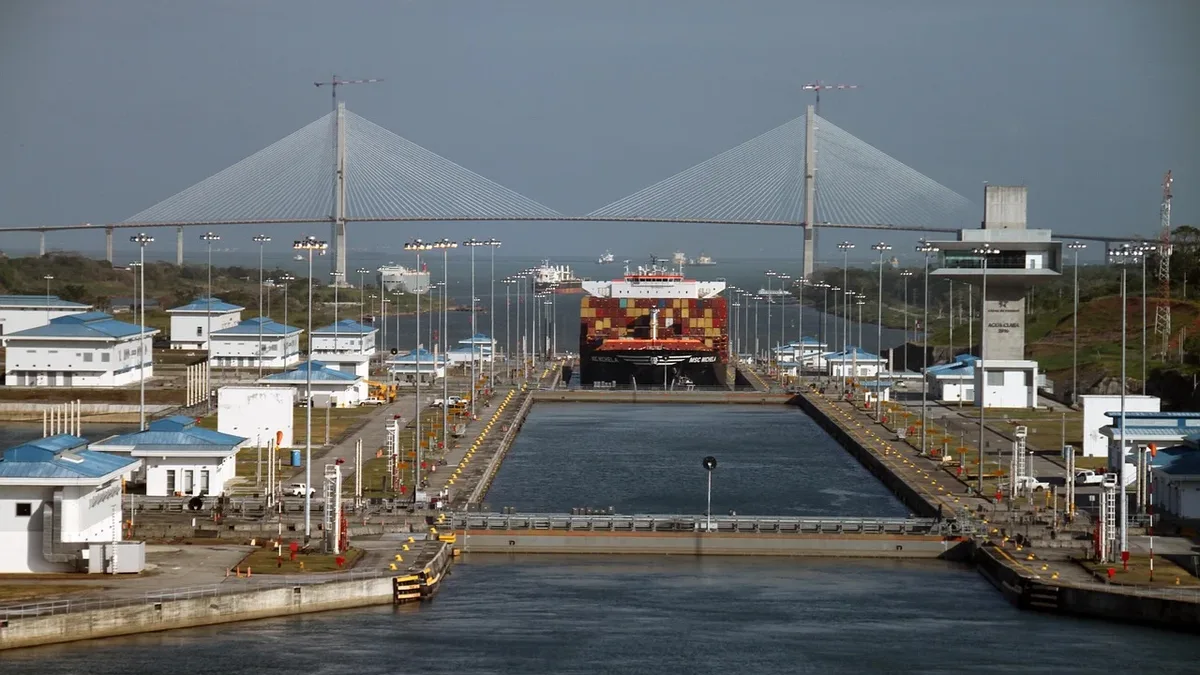
The Panama Canal Authority has postponed a planned October reduction in the maximum draft for vessels using its Neopanamax locks. This offers near-term relief for ship operators, with the draft limit remaining at 48 feet for now. The decision comes as the waterway confronts renewed freshwater scarcity concerns under a strengthening El Niño weather pattern.
Ilya Espino de Marotta took office as Administrator of the Panama Canal on Monday, becoming the first woman to lead the institution. She will serve a seven-year term through 2033. "Forty-one years ago, I came here to learn. Today, it is my turn to lead," Espino de Marotta said during her inauguration ceremony, according to gCaptain.
Her appointment coincides with the Canal managing tight water supplies. Rainfall has fallen short of expectations this year, and forecasts indicate a prolonged El Niño could bring eight months of unusually low precipitation. This echoes the historic 2023-24 drought that forced sharp reductions in daily transits and vessel drafts, creating global trade disruptions.
Current Transit and Draft Restrictions
Despite postponing the draft cut, the Canal has already implemented reduced daily transit capacity. These cuts impact the number of ship slots available for booking.
| Vessel Class | Daily Slots (From) | Effective Date |
|---|---|---|
| Neopanamax | 9 | September 3 |
| Panamax | 23 | September 15 |
Former Administrator Ricaurte Vásquez Morales warned last month of the potential for an extended dry period. The Canal's operations depend on water from Gatun Lake, which also supplies over half of Panama's population.
Long-Term Water Security Project
The long-term strategy to address water scarcity centers on the proposed Río Indio reservoir. This $1.6 billion project is viewed as critical for securing freshwater for vessel operations and Panamanian citizens. It aims to increase storage capacity and provide an additional water source during future droughts. Construction is expected to take roughly six years.
Espino de Marotta stated her commitment to focus on efficiency, transparency, and ethics. "Every dollar we manage at the Canal belongs to Panama, and that is how we will treat it," she said.
Strategic Expansion Beyond Transit
The new administrator will also oversee a major diversification of the Canal's business. A 2025-2035 strategic plan aims to transform the waterway into a broader logistics, maritime, and energy platform. This seeks to reduce dependence on toll revenue and increase the value generated by cargo moving through Panama.
A key project is the proposed Energy Corridor. This involves an approximately 76-kilometer pipeline linking the Atlantic and Pacific coasts. The system is designed to move propane, butane, and ethane across the isthmus without requiring tankers to transit the locks or consume Canal freshwater. The proposed corridor could handle up to 2.5 million barrels per day. The Authority completed the document-submission phase for prequalification in July and is now evaluating companies.
The expansion strategy also includes new container terminals. A terminal at Corozal on the Pacific side and another at Telfers on the Atlantic could add between 5 million and 6 million TEUs of annual transshipment capacity.
Administrator's Background
Espino de Marotta brings extensive operational experience to the role. She joined the Canal in 1985 as a marine engineer. She later served as Executive Vice President for Engineering and Program Management, playing a major part in the expansion program that opened the Neopanamax locks in 2016. Most recently, she served as Deputy Administrator and, in 2024, became the Canal's first Chief Sustainability Officer.
The inauguration ceremony was attended by Panamanian President José Raúl Mulino and Canal Board Chairman José Ramón Icaza. Icaza said the event demonstrated Panama's ability to transfer leadership of its most important asset through strong governance and clear rules.